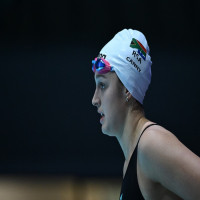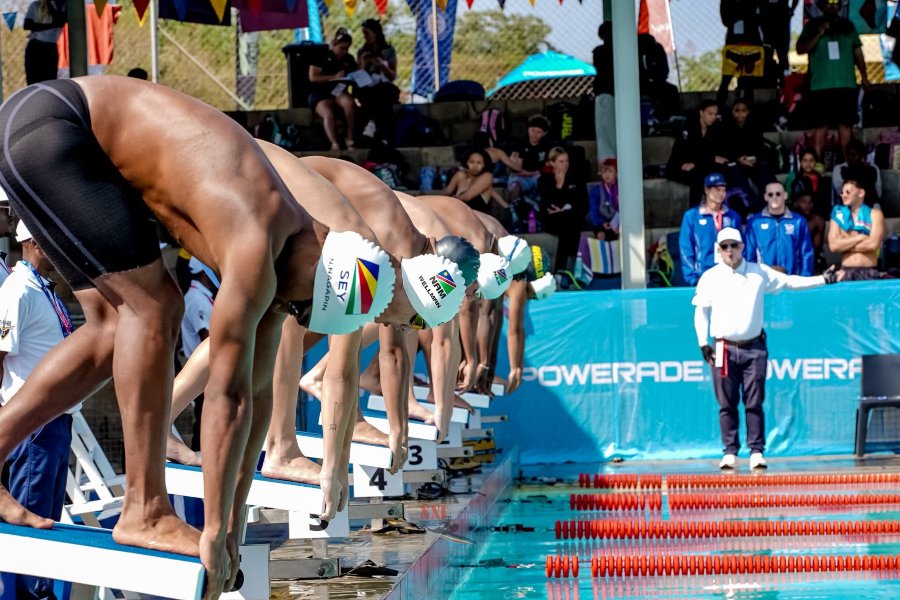
MBABANE, ESWATINI - Day 2 of the XXI Africa Aquatics Zone IV Short Course Championships delivered another spectacular session of competition on September 4, 2025, as the battle for regional supremacy intensified between powerhouses South Africa and Namibia. With 39 events across the program, swimmers continued to rewrite the record books while showcasing the extraordinary depth of talent across Southern and Eastern Africa.
SOUTH AFRICA EXTENDS DOMINANCE
South Africa reinforced their position atop the championship standings with a commanding Day 2 performance that saw them add 13 gold medals, 12 silver medals, and 2 bronze medals to their tally. The Proteas' total medal count now stands at an impressive 45 medals (22 gold, 18 silver, 5 bronze), establishing them as the clear leaders heading into the championship's second half.
The South African charge was spearheaded by several exceptional individual performances, with Abigail Kotze emerging as the star of Day 2. The versatile swimmer claimed an remarkable three gold medals, building on her Day 1 success to establish herself as one of the championship's most dominant athletes. Kotze's triple triumph demonstrates the exceptional preparation and form of the South African team.
Johan De Beer continued his record-breaking heroics from Day 1, adding two more gold medals to his collection while shattering the Boys 13-14 200m Breaststroke record with a stunning time of 2:28.79. De Beer's performance not only secured gold but established a new championship benchmark that highlighted his exceptional technical proficiency in the stroke.
Rising star Isabeau Coetsee announced her arrival on the regional stage with two gold medal performances, showcasing the remarkable depth within South Africa's junior program. Her success, combined with that of her teammates, demonstrates the comprehensive excellence across all age groups within the South African setup.
NAMIBIA MATCHES INTENSITY WITH STELLAR PERFORMANCES
Namibia refused to cede ground to their southern neighbors, delivering 8 gold medals, 8 silver medals, and 11 bronze medals on Day 2 for a total of 27 medals - matching South Africa's daily output and bringing their overall tally to 39 medals (14 gold, 11 silver, 14 bronze).
Oliver Durand continued his championship dominance with three gold medals on Day 2, including a record-breaking performance in the Boys 17-29 200m Breaststroke where his time of 2:20.76 obliterated the previous championship standard. Durand's consistency across multiple events has established him as arguably the most complete swimmer in the championship.
Young sensation Vitoria De Sousa added to her Day 1 heroics with another record-breaking swim, this time in the Girls 13-14 200m Breaststroke. Her winning time of 2:44.52 not only secured gold but rewrote the championship record, confirming her status as one of Africa's most promising young swimmers.
The Namibian success story reflects the nation's significant investment in aquatic sports development, with swimmers consistently performing above their seeding to challenge the traditional regional hierarchy.
EMERGING NATIONS MAKE THEIR MARK
Zambia delivered the surprise performance of Day 2, claiming 3 gold medals through the exceptional swimming of Jade Phiri. Phiri's double gold medal performance highlighted Zambia's growing strength in the sport and provided inspiration for the developing aquatic programs across the region.
Madagascar continued to impress with their young athletes leading the way. Aintso Ramiarison, competing in the Girls 11-12 200m Breaststroke, delivered a memorable championship record of 2:55.89 to secure gold and announce Madagascar's arrival as a serious competitor in regional competition.
Botswana maintained their strong championship form, adding 1 gold medal, 5 silver medals, and 1 bronze medal to move into fourth place overall with 16 total medals. The consistency of Botswana's performances across age groups demonstrates the sustainable development occurring within their national program.
CHAMPIONSHIP RECORDS CONTINUE TO FALL
Day 2 witnessed 5 new championship records, bringing the total to 39 records broken across the first two days of competition. The record-breaking performances came from:
- Aintso Ramiarison (Madagascar): Girls 11-12 200m Breaststroke - 2:55.89
- Vitoria De Sousa (Namibia): Girls 13-14 200m Breaststroke - 2:44.52
- Johan De Beer (South Africa): Boys 13-14 200m Breaststroke - 2:28.79
- Zuria Venter (South Africa): Girls 15-16 200m Breaststroke - 2:42.68
- Oliver Durand (Namibia): Boys 17-29 200m Breaststroke - 2:20.76
The concentration of record-breaking performances in breaststroke events highlighted the exceptional technical development occurring across the region in this demanding stroke discipline.
OVERALL MEDAL TABLE AFTER DAY 2
| Rank | Country | Gold | Silver | Bronze | Total |
|---|---|---|---|---|---|
| 1 | South Africa | 22 | 18 | 5 | 45 |
| 2 | Namibia | 14 | 11 | 14 | 39 |
| 3 | Botswana | 3 | 8 | 5 | 16 |
| 4 | Madagascar | 4 | 5 | 2 | 11 |
| 5 | Zimbabwe | 1 | 3 | 7 | 11 |
| 6 | Seychelles | 2 | 2 | 5 | 9 |
| 7 | Angola | 1 | 2 | 4 | 7 |
| 8 | Mauritius | 0 | 1 | 5 | 6 |
| 9 | Zambia | 3 | 0 | 1 | 4 |
| 10 | Eswatini | 1 | 1 | 2 | 4 |
| 11 | Mozambique | 1 | 0 | 1 | 2 |
CHAMPIONSHIP STARS EMERGE
The championship has already produced several swimmers who have established themselves as regional stars. Abigail Kotze and Oliver Durand lead the multiple gold medal winners with 5 and 5 golds respectively across the two days, while Johan De Beer has claimed 4 gold medals and Vitoria De Sousa has secured 3 golds.
The depth of talent across age groups has been particularly impressive, with swimmers from 11 years old through to the senior categories all contributing to the record-breaking performances. This breadth suggests a healthy pipeline of talent that bodes well for the future of aquatic sports in the region.
TECHNICAL EXCELLENCE ON DISPLAY
The quality of swimming witnessed across Day 2's 39 events demonstrated the significant technical advancement occurring throughout Zone IV. The concentration of breaststroke records, in particular, highlighted the specialized coaching and development programs that have elevated technical standards across multiple nations.
Individual medley events showcased the versatility of the region's swimmers, while the freestyle and butterfly competitions continued to demonstrate the speed and power that has become synonymous with African aquatic sports.
LOOKING AHEAD
With two days of competition completed and records falling at an unprecedented rate, the XXI Africa Aquatics Zone IV Championships have established themselves as a landmark event for regional swimming. The battle between South Africa and Namibia for overall supremacy remains compelling, while the emergence of swimmers from smaller nations has added unpredictability and excitement to every session.
The remaining days promise to deliver more exceptional performances as swimmers target personal bests and championship records in the season's most important competition. With 84 total medals already awarded and 39 championship records already broken, the championships have exceeded all expectations for quality and competitiveness.
Competition continues with Day 3 featuring another comprehensive program designed to test swimmers across all strokes and distances, as the championship builds toward what promises to be a thrilling conclusion.
The XXI Africa Aquatics Zone IV Championships continue through September 6, 2025, in Mbabane, Eswatini. For complete results and championship information, visit the results page
Africa Aquatics Media ©